2026–2027 Rural Implementation Study
Measuring how Emotionally Intelligent Music Instruction (EIMI) impacts literacy, engagement, and student well-being in under-resourced and rural “music desert” communities.
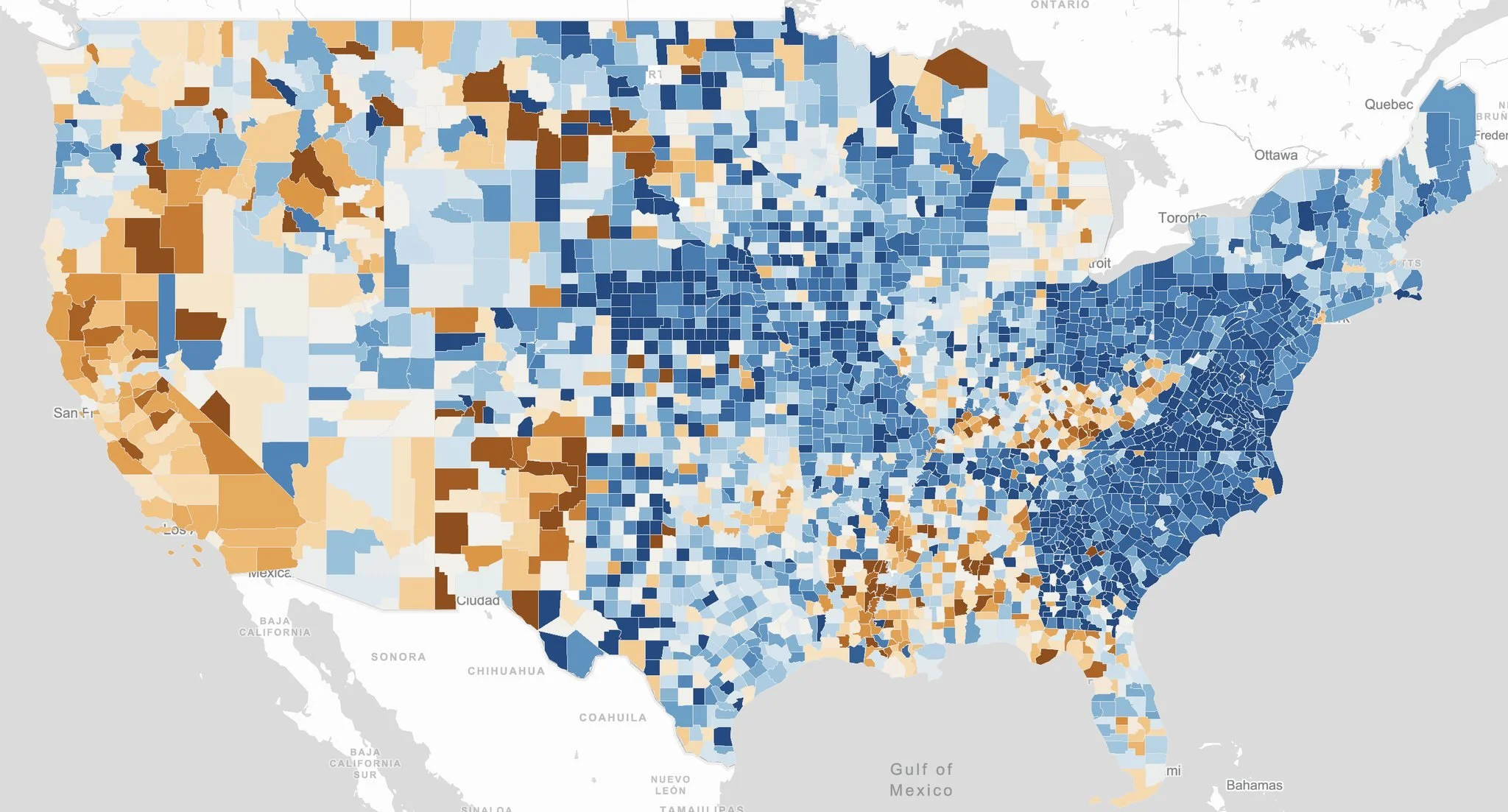
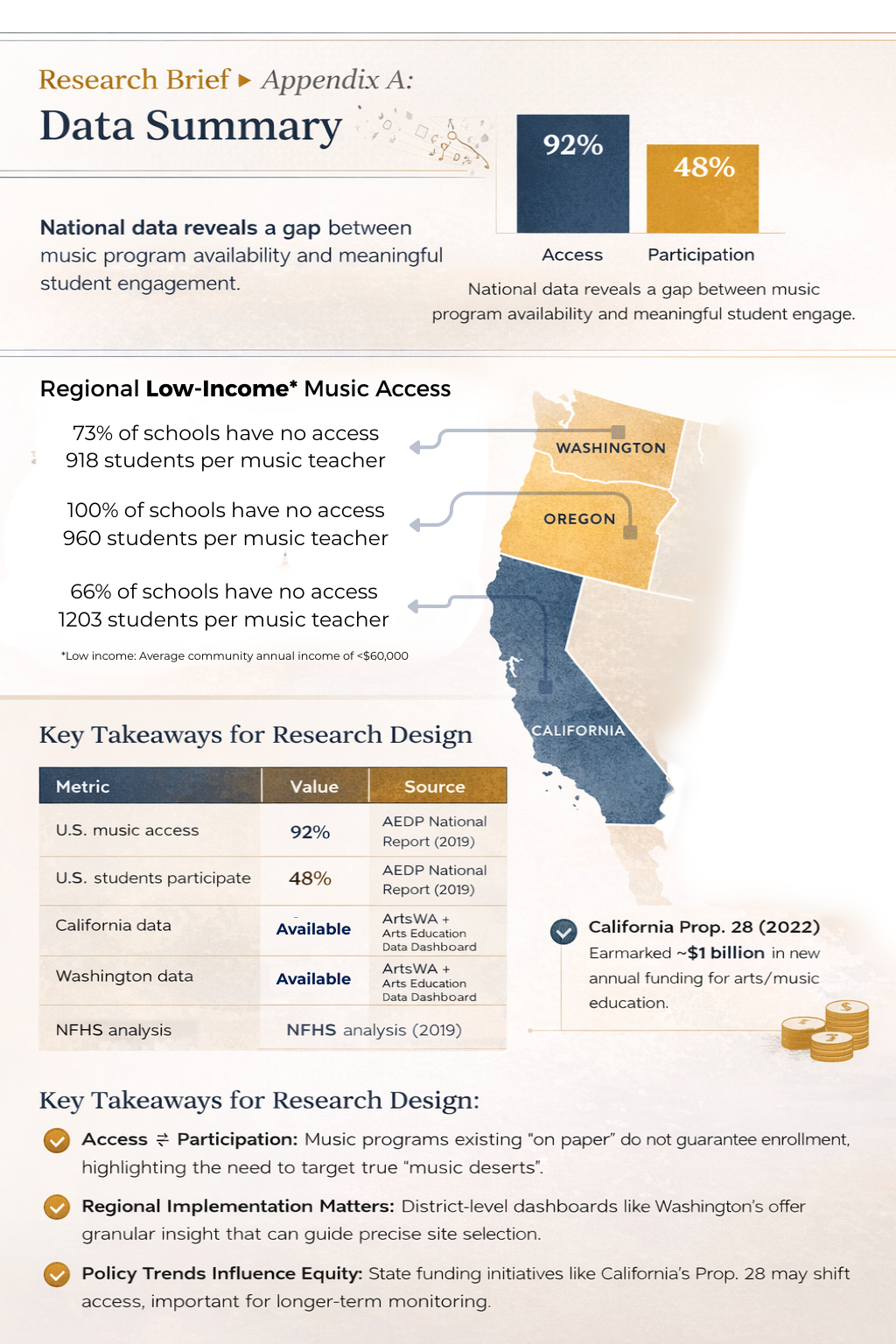
Rates of music education access in the US
Credit: Arts Education Data Project
The I Am Music Foundation will implement Emotionally Intelligent Music Instruction (EIMI) across selected rural and under-resourced districts beginning in 2026.
The study will evaluate the impact of structured, emotionally intelligent music pedagogy on:
Literacy development
Emotional regulation
Classroom engagement
Teacher retention and instructional confidence
Why This Research, Why the PNW
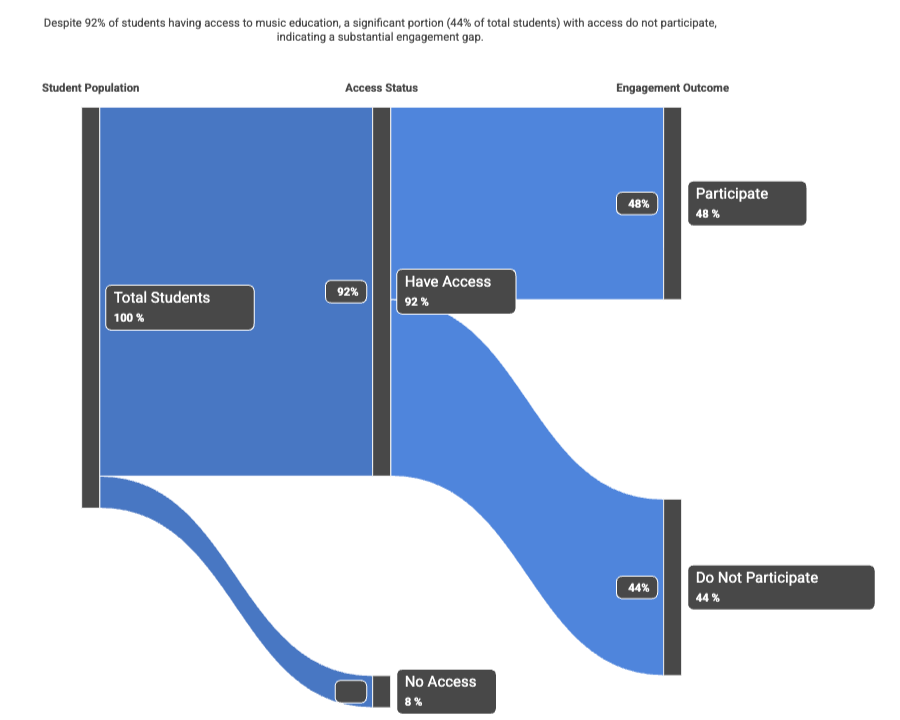
Access isn’t the same as Participation
Just because students have technical access to a music teacher, doesn’t mean that they have practical access to music making.
In many places, students have access to music learning on paper, but not in reality.
Nationally, 92% of students have access to music education, but only 48% can actually participate
Target PopulationRural districts with limited music infrastructure
High-need student populations
Classrooms lacking consistent arts programming
Data-Informed Definition of “Music Desert”
Definition
A district/school can be considered a “music desert” when one or more conditions are present:
No music course offering (true access gap)
Music exists but participation is low (schedule, staffing, enrollment barriers)
Access exists but implementation is intermittent or inequitable by school/community

No Program

Low Participation

Implementation
Problems
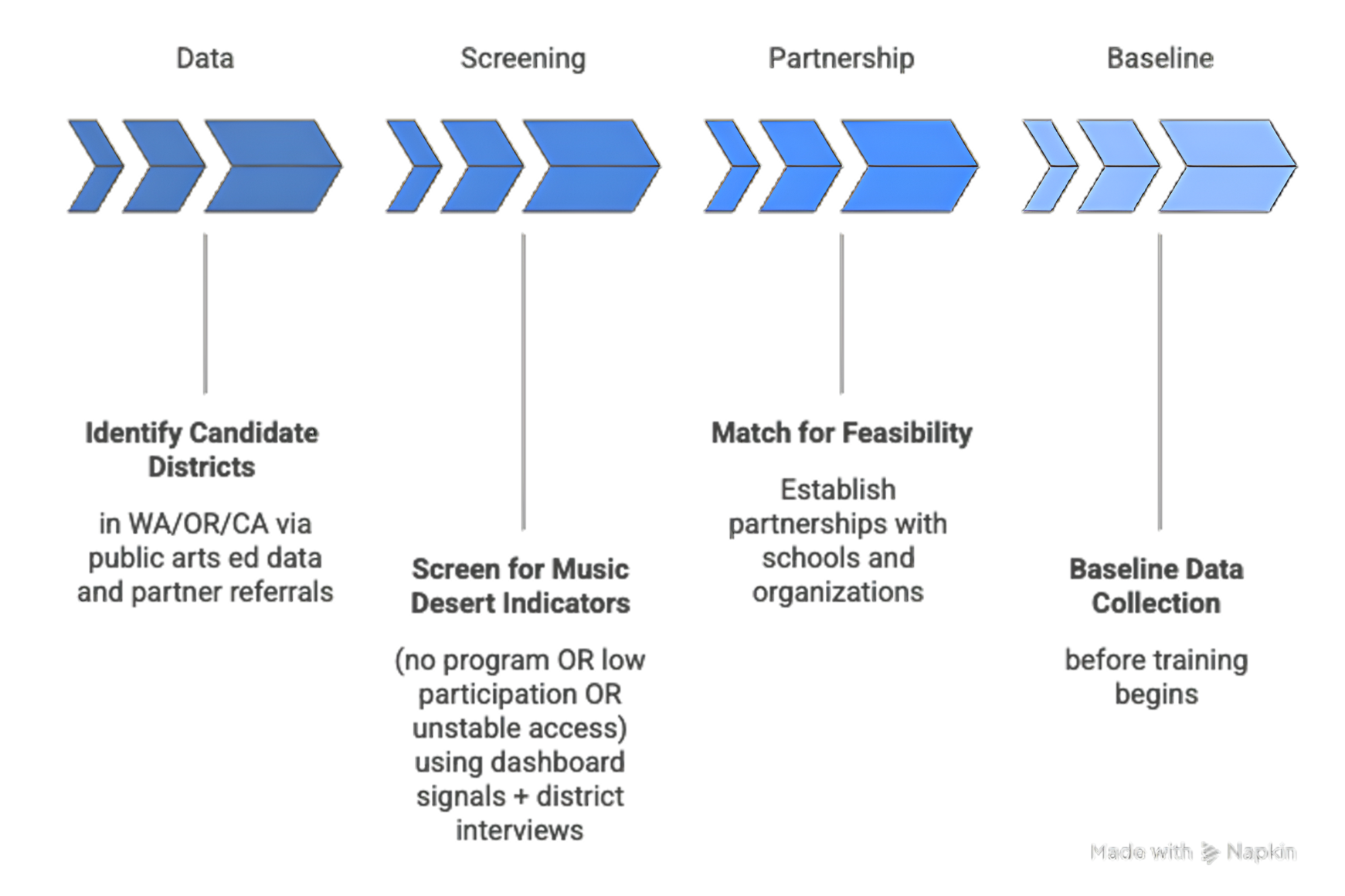
Site-Selection Method
Intervention Model
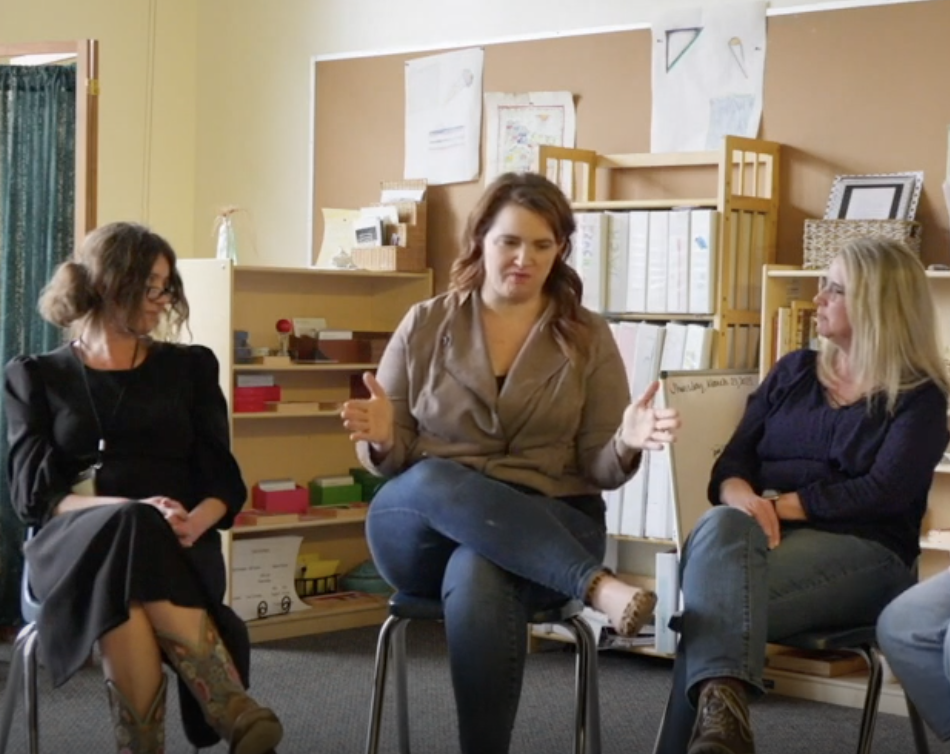
Phase 1 – Teacher Training
Educators complete asynchronous EIMI training modules and receive implementation guides.
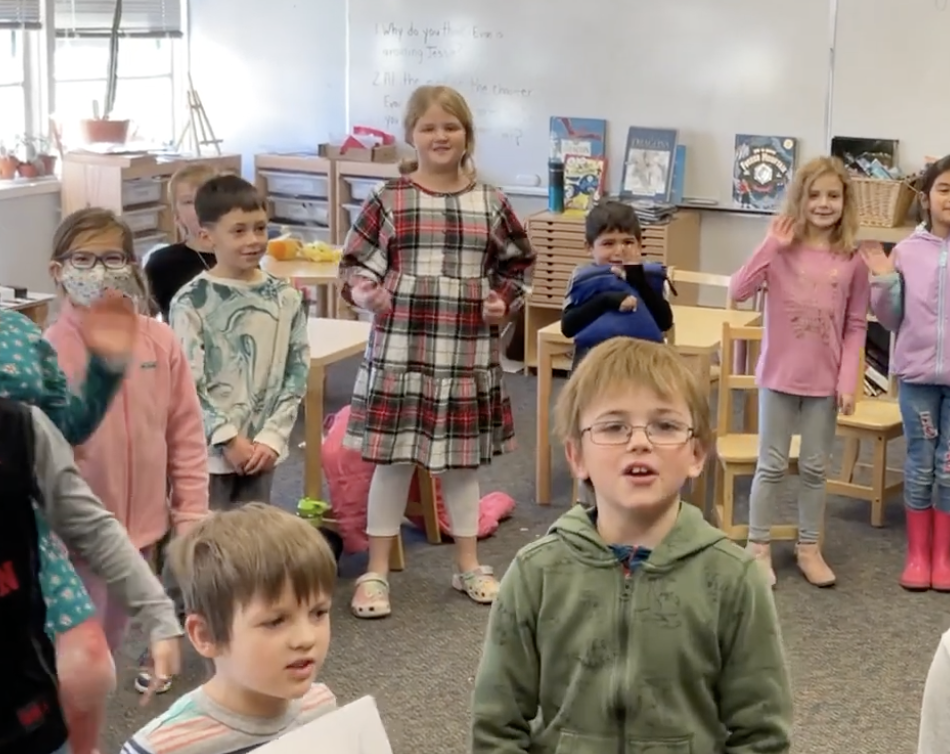
Phase 2 – Classroom Integration
Structured music instruction embedded within classroom routines.

Phase 3 – Ongoing Support
Continued coaching, peer collaboration, and reflective practice sessions.
Research Brief Outline (Appendix A Illustration